Division Type: Top Level Division
Division 4
HR
The Fire Department Human Resources team handles onboarding, workers comp, modified duty, transfers, and promotions; manage employee records and benefits; guide members through policies, leaves, and career development; and partner with leadership to ensure a safe, fair, and supportive workplace. HR is here to help firefighters and staff navigate every stage of their careers so they can stay focused on serving Denver.
Internal Affairs (IA)
Denver Fire Department’s Internal Affairs (IA) unit is responsible for ensuring integrity, accountability, and public trust within the department. IA reviews and investigates complaints or concerns involving member conduct, workplace behavior, and policy compliance. The team provides an objective, fair, and confidential process to examine facts, identify issues, and recommend solutions or corrective actions when needed.
Through this work, IA helps maintain a professional, safe, and respectful environment for both department members and the community they serve.
Fire Investigation Unit (FIU)
The Fire Investigation Unit (FIU) will investigate without delay the cause, origin, and circumstances of every fire or explosion or intent to commit such an act involving the loss of life or injury to a person or destruction or damage to property and, if it appears that such fire or explosion is of suspicious origin, the Investigators will take immediate charge of all physical evidence relating to the incident and will pursue the investigation to its conclusion.
Training
Training programs are aligned with Department Standard Operating Guidelines, Directives, and overall objectives. Improvements support higher effectiveness in delivery of emergency services, maintain the City’s Insurance Service Office ISO 1 rating, and increase career opportunities for quality, diverse candidates.
Recruiting
The Departments Recruiting team works to attract, inform, and guide the next generation of firefighters and fire service professionals. Recruiters connect with the community through outreach events, career fairs, and educational programs; provide candidates with clear information about qualifications and the hiring process; and support applicants from initial interest through testing and onboarding. Their mission is to build a diverse, skilled, and dedicated workforce that reflects and serves the Denver community.
Community Risk Reduction (CRR)
The Community Risk Reduction program is dedicated to strengthening safety and resilience in the communities we serve. Through proactive strategies and strong partnerships, CRR develops and delivers essential safety education and resources that foster a culture of awareness and preparedness.
Aligned with the Denver Fire Department’s mission, the CRR team serves with integrity, accountability, inclusivity, and the courage to act—providing timely, professional services that support life safety and property conservation.
By collaborating with community partners, CRR upholds the highest standards of prevention, preparedness, mitigation, and engagement. Their mission is to identify and address emerging risks through innovative solutions and continuous education. Staying informed of local, national, and global trends, CRR works with stakeholders to protect our customers and build resilient communities where everyone can thrive.
Outreach
At DFD, we recognize that strong community partnerships are essential to public safety and community resilience. Through outreach events, partnerships, and new initiatives, the outreach team continues to build trust, promote fire and life safety education, and create meaningful opportunities for engagement. Through social media the team is always excited to share the highlights of their efforts and the positive impact everyone is making with the communities they serve.
Public Education
The Public Education program is committed to developing, providing, and disseminating safety education resources and programs to both the public and our internal stakeholders. Public education requires dedication to ongoing education and identification of current community risks. Members shall stay abreast of trends locally, nationally, and internationally affecting like-sized and greater departments to proactively mitigate risk at large. The guiding principle of the Public Education Program is the safety of our customers through collaboration, partnerships, perseverance, and dedication to purpose.
Division 3
Division 2
Welcome to the Denver Fire Department Fire Prevention Division
The Fire Prevention Division is dedicated to safeguarding the lives, property, and environment of Denver through proactive fire safety education, inspection, enforcement, and planning. Serving one of the fastest growing and most vibrant cities in the United States, our division plays a critical role in ensuring that Denver’s homes, businesses, and public spaces meet the highest standards of fire and life safety.
Our team is comprised of 80 dedicated professionals, 50 uniformed members and 26 civilian staff who bring a wide range of expertise to fire prevention efforts. With a certification compliance rate of 98%, we pride ourselves on maintaining the highest levels of professionalism, knowledge, and service.
We work in close collaboration with residents, developers, business owners, and other city agencies to uphold the City and County of Denver’s fire code and to reduce the risk of fire through education and engineering. Our team reviews building and development plans, conducts on-site inspections, issues permits, investigates fire hazards, and provides expert guidance to help our community stay safe and resilient.
As part of the Denver Fire Department, our mission is rooted in service, safety, and community partnership. Whether you’re building a new facility, planning an event, or simply seeking information to keep your family safe, the Fire Prevention Division is here to support you.
Together, we can build a safer Denver—one inspection, permit, and prevention effort at a time.
Food Trucks
The restaurant group inspects and permits food trucks and restaurant in alignment with regional and national safety standards. In accordance with the International Code Council (ICC), the Denver Fire Office of Fire Marshal meets/exceeds the plan review and inspection standards. The duties of this team include inspections, processing, and issuance of annual flammable permits to all Food Trucks and restaurants operating within the City and County of Denver. Through the combined efforts of the restaurant group, food truck and restaurant stakeholders receive valuable fire safety education and, with their compliance, reduces the incidence of fire.
Marijuana
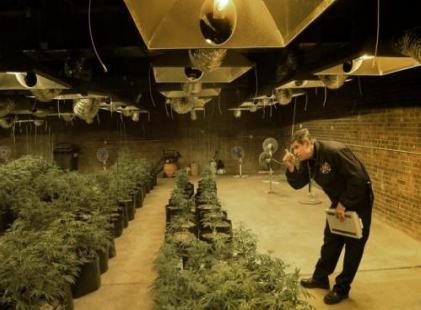
The Division currently runs a robust marijuana compliance program. Inspections are performed on a bi-annual basis, and meetings are held weekly with other groups within the city and monthly with the FINGOV Committee. Office of social equity Hazards present in marijuana facilities include pesticide use, CO2 enrichment, flammable liquid storage and use, inadequate housekeeping, restricted egress paths, un-permitted construction and exposure to smoke containing psychoactive cannabinoids. Additionally, home grow and other questionable occupancies present issues for inspectors related to legality and right of entry challenges. Recent incidents in marijuana facilities are most often occurring in cultivation operations. Permitting review requirements for extraction facilities has resulted in few incident responses to these types of operations, even with the variety of hazardous solvents and evolving processes and procedures desired by the industry.
Division 1
The Operations division consists of 6 districts covering 155 square miles including the Cities of Glendale, Skyline, Sheridan and Englewood. Operations has 34 stations with 52 companies and is staffed with 815 total personnel across three shifts. This staffing consists of 4 Shift Commanders, 21 Assistant Chiefs, 51 Captains, 120 Lieutenants, 153 Engineers, 607 Technicians and Firefighters. There are 1,114 total uniformed members and 46 professional staff. The Operations Division operates with four-person staffing on all apparatus with a 203-person minimum on duty every day.
HazMat
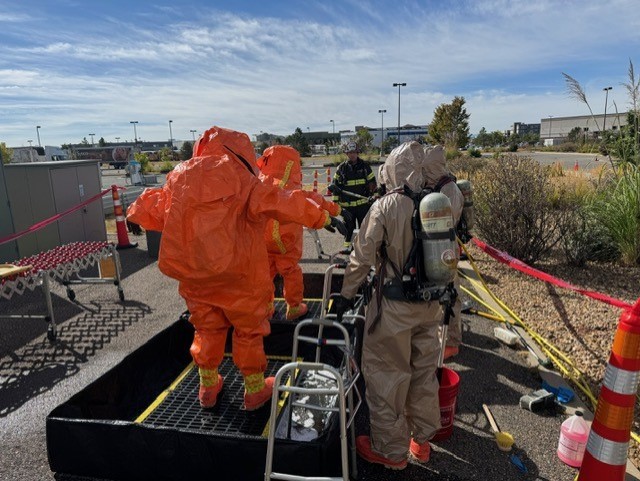
The Denver Fire Department’s Hazardous Materials (Hazmat) Team is a highly trained, specialized unit dedicated to protecting the community from chemical, biological, radiological, and other hazardous incidents. The team responds to spills, leaks, transportation accidents, industrial emergencies, and any situation involving unknown or dangerous substances. Their work includes identifying hazards, containing or mitigating threats, ensuring environmental safety, and coordinating with local, state, and federal partners when necessary.
In addition to emergency response, the Hazmat Team provides ongoing training, risk assessments, and technical expertise across the department and to community partners. Their advanced knowledge, specialized equipment, and disciplined approach help keep Denver safe and resilient in the face of complex, high-risk situations.
Wildland
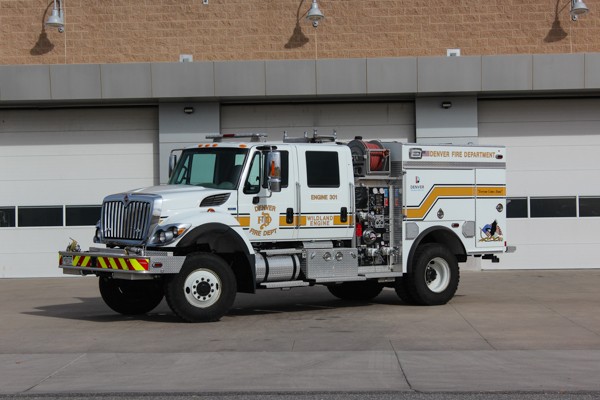
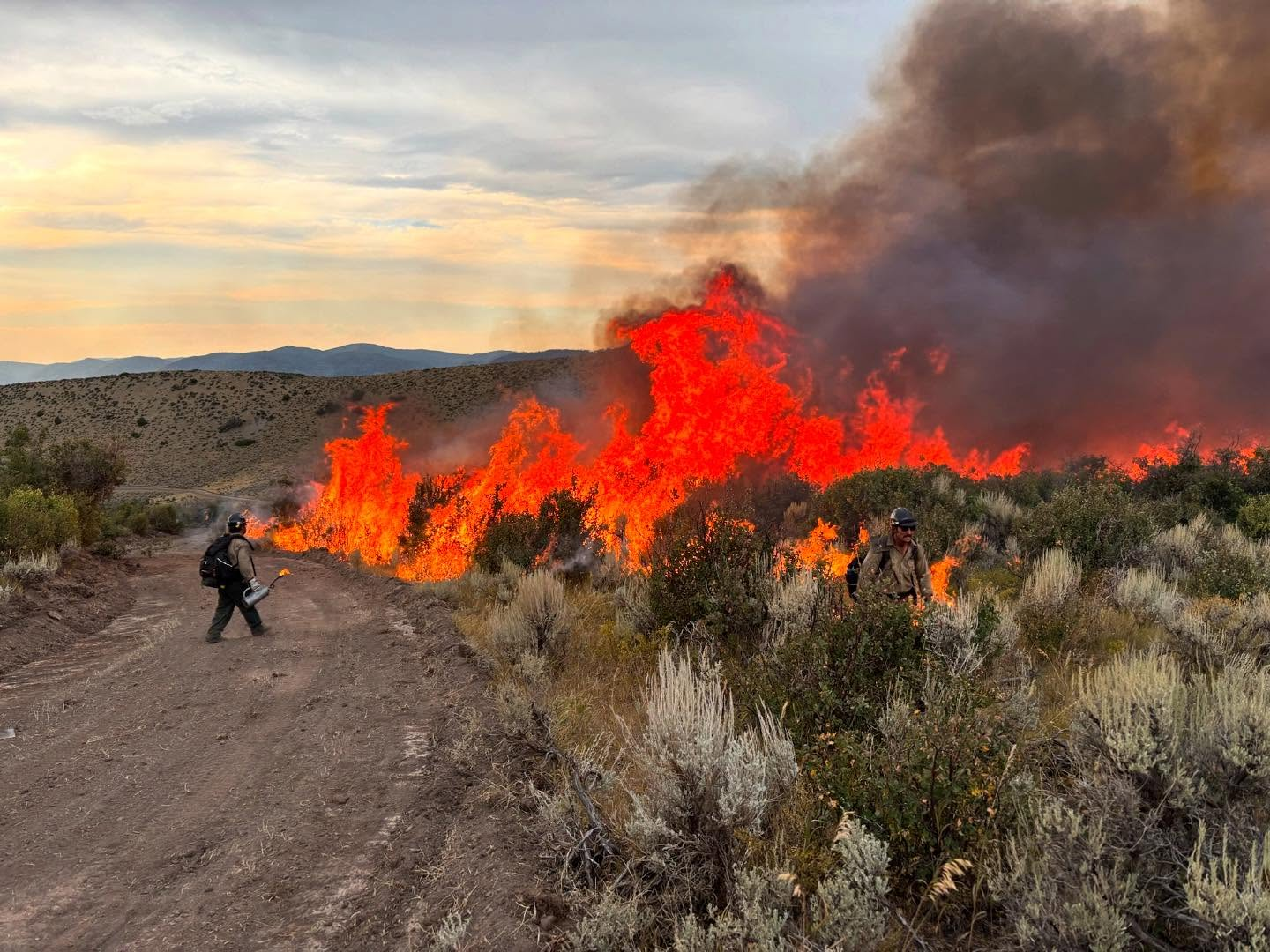
The Denver Fire Department Wildland team is the largest in the region in terms of membership with a roster of over 220 qualified Wildland Firefighters from within the City and Denver International Airport (DIA). The team and its wildland apparatus are responsible for responding to interface brush and grass fires within the City and County limits of Denver, supporting suppression efforts if needed at the DIA, and throughout the region and country. Members of the team respond as single resources, as crews for three (3) wildland engines as well as members of the 10-person suppression module. A pre-designated Type 1 Engine Strike Team is available to support wildland fire as well as all-hazards incidents within the state of Colorado. Annually the Chief of the Department approves a Departmental Directive which specifies the roles and responsibilities of all wildland team members.
EMS Operations
The Denver Fire Department EMS/OPS division is responsible for providing Basic Life Support (BLS) services to the City and County of Denver and the adjacent communities we serve (Glendale, Sheridan, Englewood, Skyline). Denver Health and Hospital (DHH) Paramedic Division is responsible for Advanced Life Support (ALS) care in the City of Denver and the communities we serve. In addition to BLS response, DFD employs an EMS Education and Quality Assurance team that comprises of three paramedic trainers, an EMS Lieutenant, Quality Assurance/Quality Improvement coordinator and an EMS Manager. Denver Fire’s EMS program falls under the direction of the Department of Safety’s Medical Director.
EMS Education
Established in 2023, the Denver Fire Department operates an EMS education center recognized by the State of Colorado. The DFD EMS center employs three Paramedic EMS trainers, Quality Assurance/Quality Improvement Administrator, and an EMS Lieutenant that fall under the supervision of the Operations Division Chief and EMS Manager. The EMS education program meets or exceeds National Registry and State of Colorado EMT-Basic initial and continuing education requirements. DFD EMS education also provides full IV/IO course delivery to Department members. Additionally, the EMS education staff provides Red Cross/AHA CPR and BLS recertification for Department members. DFD EMS also supports those members who have their Paramedic certification and offer ALS Courses such as ACLS and PALS. An additional component of community-based EMS education delivery is also provided by the staff.
Tech Rescue
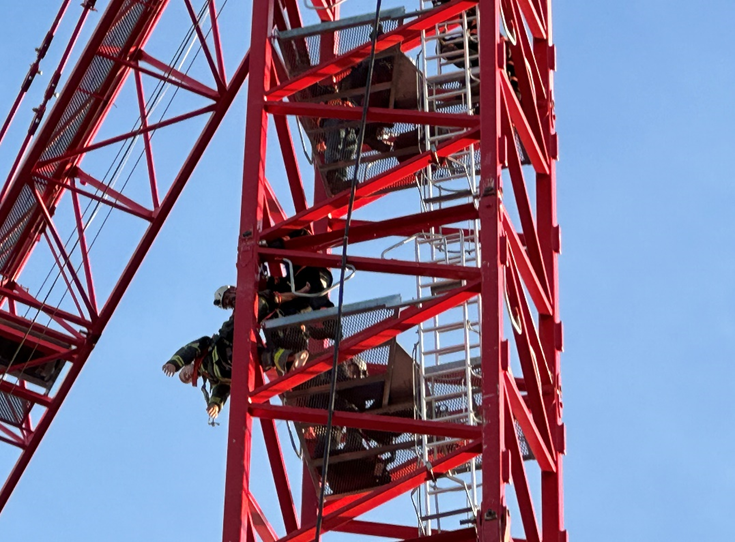
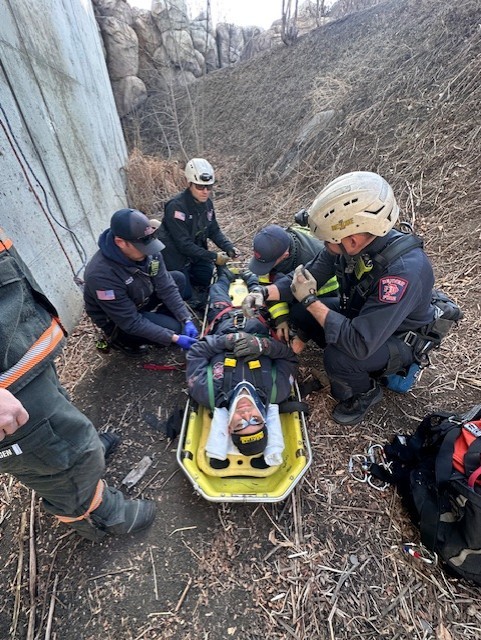
The Denver Fire Department’s Technical Rescue Team is a highly specialized unit trained to handle the most complex and high-risk rescue situations. These firefighters are experts in disciplines such as structural collapse rescue, confined space rescue, high-angle rope operations, trench rescue, swift water rescue, and other technical emergencies that require advanced skills and precision.
The team responds to incidents across the city and region, bringing specialized equipment, problem-solving capability, and extensive training to safely reach, stabilize, and remove victims from challenging environments. They also provide technical guidance, pre-incident planning, and training to other crews and partner agencies.
Their work ensures Denver is prepared for low-frequency, high-impact emergencies that demand expertise beyond standard firefighting operations.
The technical rescue companies in the Denver Fire Department are Heavy Rescue-1, Heavy Rescue-2, Engine-1 (Water Rescue Unit), and Tower-1 (Collapse Unit). The Haz-Mat team is comprised of Engine-9, Tower-9 (HAMER-1) and Engine-6 (DECON). Each of these rigs maintains 4-person staffing with daily minimum requirements for the specialties as follows:
Dive Rescue – 6
Swiftwater – 7
High-Angle – 6
Confined Space/Collapse/Trench – 6
Haz-Mat – 12 (discussed further in Haz-Mat program appraisal section)