Division 1
The Operations division consists of 6 districts covering 155 square miles including the Cities of Glendale, Skyline, Sheridan and Englewood. Operations has 34 stations with 52 companies and is staffed with 815 total personnel across three shifts. This staffing consists of 4 Shift Commanders, 21 Assistant Chiefs, 51 Captains, 120 Lieutenants, 153 Engineers, 607 Technicians and Firefighters. There are 1,114 total uniformed members and 46 professional staff. The Operations Division operates with four-person staffing on all apparatus with a 203-person minimum on duty every day.
HazMat
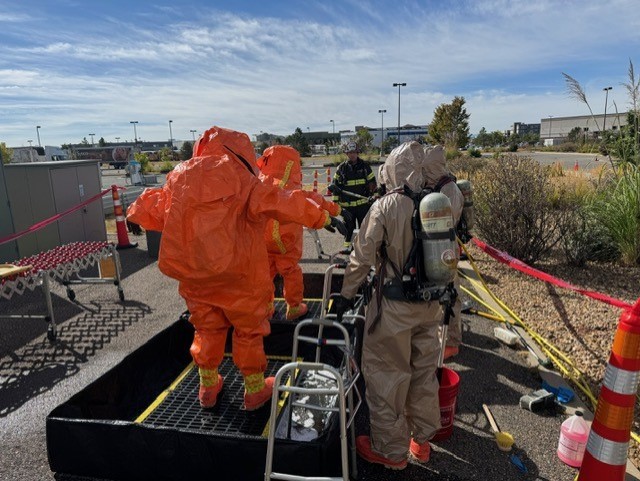
The Denver Fire Department’s Hazardous Materials (Hazmat) Team is a highly trained, specialized unit dedicated to protecting the community from chemical, biological, radiological, and other hazardous incidents. The team responds to spills, leaks, transportation accidents, industrial emergencies, and any situation involving unknown or dangerous substances. Their work includes identifying hazards, containing or mitigating threats, ensuring environmental safety, and coordinating with local, state, and federal partners when necessary.
In addition to emergency response, the Hazmat Team provides ongoing training, risk assessments, and technical expertise across the department and to community partners. Their advanced knowledge, specialized equipment, and disciplined approach help keep Denver safe and resilient in the face of complex, high-risk situations.
Wildland
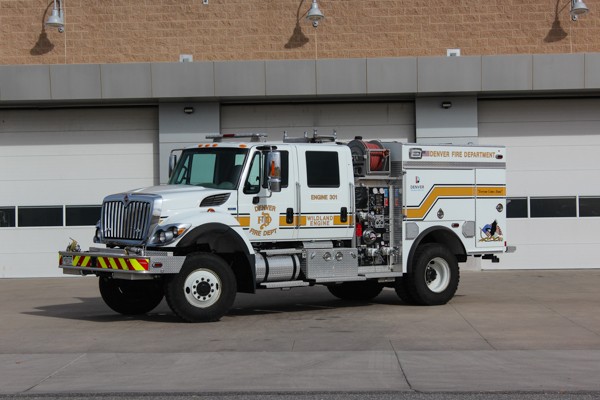
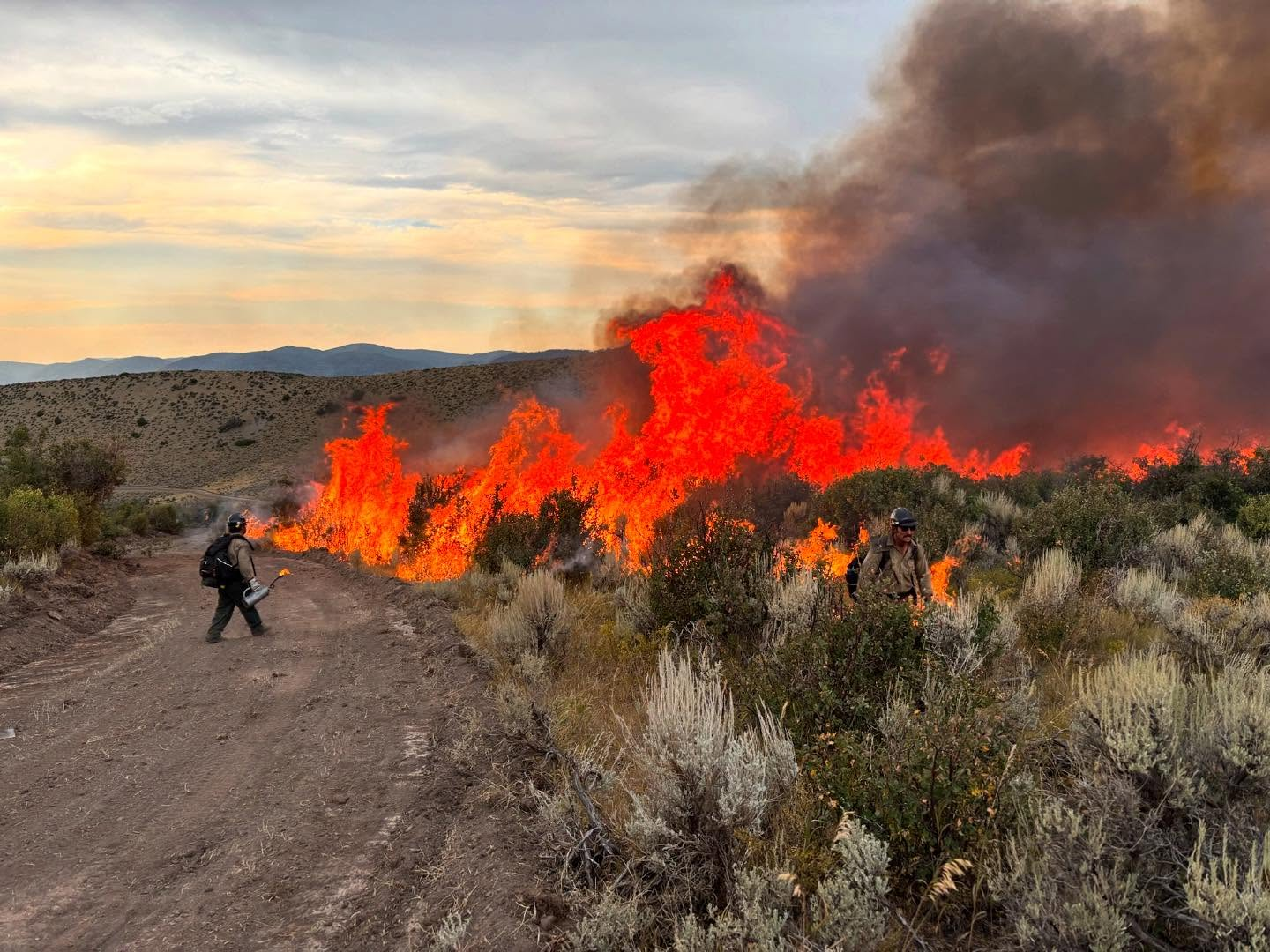
The Denver Fire Department Wildland team is the largest in the region in terms of membership with a roster of over 220 qualified Wildland Firefighters from within the City and Denver International Airport (DIA). The team and its wildland apparatus are responsible for responding to interface brush and grass fires within the City and County limits of Denver, supporting suppression efforts if needed at the DIA, and throughout the region and country. Members of the team respond as single resources, as crews for three (3) wildland engines as well as members of the 10-person suppression module. A pre-designated Type 1 Engine Strike Team is available to support wildland fire as well as all-hazards incidents within the state of Colorado. Annually the Chief of the Department approves a Departmental Directive which specifies the roles and responsibilities of all wildland team members.
EMS Operations
The Denver Fire Department EMS/OPS division is responsible for providing Basic Life Support (BLS) services to the City and County of Denver and the adjacent communities we serve (Glendale, Sheridan, Englewood, Skyline). Denver Health and Hospital (DHH) Paramedic Division is responsible for Advanced Life Support (ALS) care in the City of Denver and the communities we serve. In addition to BLS response, DFD employs an EMS Education and Quality Assurance team that comprises of three paramedic trainers, an EMS Lieutenant, Quality Assurance/Quality Improvement coordinator and an EMS Manager. Denver Fire’s EMS program falls under the direction of the Department of Safety’s Medical Director.
EMS Education
Established in 2023, the Denver Fire Department operates an EMS education center recognized by the State of Colorado. The DFD EMS center employs three Paramedic EMS trainers, Quality Assurance/Quality Improvement Administrator, and an EMS Lieutenant that fall under the supervision of the Operations Division Chief and EMS Manager. The EMS education program meets or exceeds National Registry and State of Colorado EMT-Basic initial and continuing education requirements. DFD EMS education also provides full IV/IO course delivery to Department members. Additionally, the EMS education staff provides Red Cross/AHA CPR and BLS recertification for Department members. DFD EMS also supports those members who have their Paramedic certification and offer ALS Courses such as ACLS and PALS. An additional component of community-based EMS education delivery is also provided by the staff.
Tech Rescue
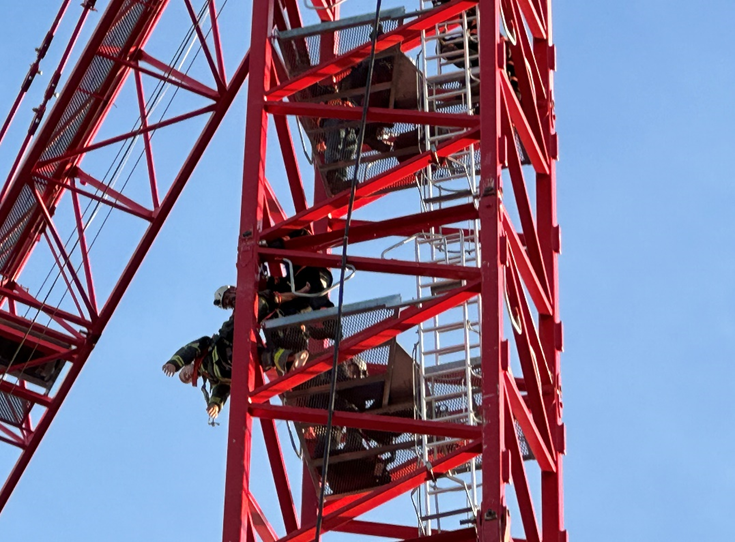
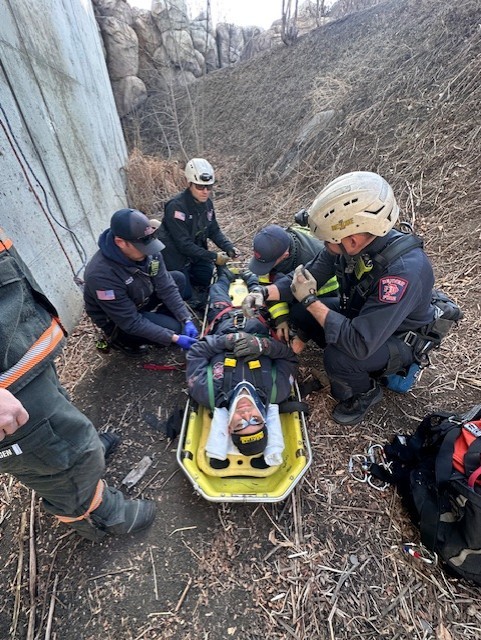
The Denver Fire Department’s Technical Rescue Team is a highly specialized unit trained to handle the most complex and high-risk rescue situations. These firefighters are experts in disciplines such as structural collapse rescue, confined space rescue, high-angle rope operations, trench rescue, swift water rescue, and other technical emergencies that require advanced skills and precision.
The team responds to incidents across the city and region, bringing specialized equipment, problem-solving capability, and extensive training to safely reach, stabilize, and remove victims from challenging environments. They also provide technical guidance, pre-incident planning, and training to other crews and partner agencies.
Their work ensures Denver is prepared for low-frequency, high-impact emergencies that demand expertise beyond standard firefighting operations.
The technical rescue companies in the Denver Fire Department are Heavy Rescue-1, Heavy Rescue-2, Engine-1 (Water Rescue Unit), and Tower-1 (Collapse Unit). The Haz-Mat team is comprised of Engine-9, Tower-9 (HAMER-1) and Engine-6 (DECON). Each of these rigs maintains 4-person staffing with daily minimum requirements for the specialties as follows:
Dive Rescue – 6
Swiftwater – 7
High-Angle – 6
Confined Space/Collapse/Trench – 6
Haz-Mat – 12 (discussed further in Haz-Mat program appraisal section)